
Stairlift for narrow stairs
Narrow or tight staircases can quickly become a barrier in everyday life. A stairlift for narrow stairs offers a safe and space saving solution while keeping the staircase usable. In this guide you will learn in a clear and practical way what counts as a narrow staircase, where a stairlift can be installed, which options exist for straight and curved stairs, what alternatives are possible, and what costs are realistic.

Solutions for Narrow Staircases
What are “narrow” or “tight” stairs?
A staircase is not only “narrow” because it feels that way. What matters are measurable factors, especially the narrowest point along the stairs. How can you tell if your stairs are narrow?
- The usable walking width is limited, for example because of a handrail, wall ledges, or radiators.
- The staircase is steep or has tight turns, such as a spiral staircase or a staircase with landings.
- Doors open into the stair area or there are pinch points on landings.
- Headroom is limited, for example in older buildings or under a sloped ceiling.
Why are narrow stairs more challenging?
With tight staircases the lift, seat, footrest, and rail must be planned so that:
- the lift travels safely, even around curves,
- getting on and off is possible,
- and other people can still use the stairs, often with folding parts and smart parking positions.
Where can a stairlift be installed?
In practice a stairlift is usually fixed to the steps, not to the wall. This matters in many homes because walls are not always strong enough or suitable.
Typical installation locations
- On the staircase, step mounted
- The rail is screwed onto the steps using support brackets
- Often the standard solution in existing buildings
- On the wall, wall mounted if possible
- Only suitable if the structure and wall construction allow it
- In special cases this option can offer advantages
- Inside or outside of the staircase?
- Especially with narrow stairs the rail position is critical.
- Inside: a smaller turning radius, on curved stairs it is often tighter and can be challenging.
- Outside: a larger turning radius, often easier to plan and can create more space.
- Practical example, curved stairlift system
- With the Freecurve concept the minimum staircase width depends on the rail position.
- Outside Van Gogh from 690 mm
- Inside Rembrandt from 770 mm
- Technical data from your Freecurve handbook.
- With the Freecurve concept the minimum staircase width depends on the rail position.
Stairlifts for Straight and Curved Stairs
Straight narrow stairs are usually simpler and more affordable. The stairlift runs on a straight standard rail, installation is faster, and the design can be very slim. It is important that the seat, armrests, and footrest can be folded so the staircase does not feel blocked in everyday use.
Curved or spiral narrow stairs almost always require a custom made rail. Precise planning is essential, using digital measurements and a 3D model. The rail is adjusted exactly to curves, landings, and slopes, and intermediate stops are possible. Technical reference using the Freecurve example includes inclines up to 61 degrees, rail lengths up to 35 meters, a load capacity of up to 125 kg, and a speed of about 0.11 m/s.
Which type of lift works best with limited space?
A seated stairlift is usually the best solution because it is practical for daily use and can be parked in a space saving way with foldable components. A standing lift is useful when space is extremely limited or sitting is difficult, provided there is enough stability to stand safely. A platform lift is only suitable if a wheelchair or walker needs to be transported and if enough space is available, as it requires much more room than a seated stairlift.
Our stairlift solutions
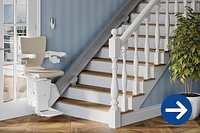
SLG 1100
For straight indoor staircases.
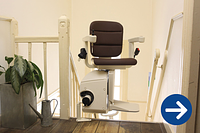
SLK FC
For curved indoor staircases.
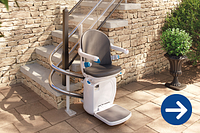
SLK 4000
For curved staircases indoors & outdoors.
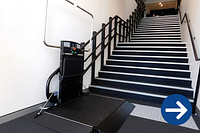
Artira inside
For curved indoor staircases
If a Stairlift Is Not Suitable: Practical Alternatives
Some staircases are so narrow or built in such an awkward way that a classic stairlift cannot be operated safely. In that case other options may be a better fit. A standing lift can help when a seated stairlift is too wide or sitting is not possible. A vertical lift can work if there is space next to the stairs for a compact lift. A home lift is a more comfortable option but usually more expensive. For just a few steps simple ramps or improving the handrail can be enough. As a practical layout solution you can also move key rooms like the bedroom or bathroom to the ground floor.
More solutions from Garaventa Lift
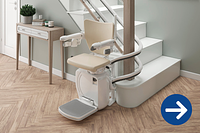
Stairlifts
Learn more!
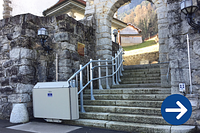
Inclined platform lifts
Learn more
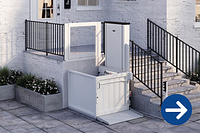
Vertical platform lifts
Learn more!

Homelifts
Learn more!
We look forward to hearing from you!
We are here to help you!
-

Our sales team
-

Emine Onder
Sales support
-

Armin Finauer
Sales support
This might also interest you
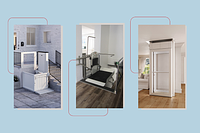
Stairlift alternatives
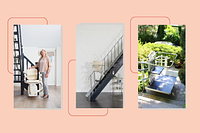
In many homes stairs are the main way to move around until climbing them suddenly becomes a strain. This can happen gradually or very quickly after surgery, an accident, or because of a chronic condition. Then the question is not only which stairlifts are available but also which alternatives to a stairlift might be the better solution.
What is a stairlift?
A stairlift is a mobility system permanently installed on a staircase that helps people with limited mobility travel safely from one floor to the next. In most cases, it is a seated lift that moves along a rail fixed to the stairs. For wheelchair users, platform lifts are available, offering a stable surface for travel.
How much does a stairlift cost?
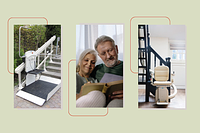
A stairlift can take away the uncertainty of using the stairs and make it possible to continue living in your own home. However, many people don’t know what stairlift costs in Germany really look like, or how much they may actually pay after grants or subsidies are applied.
Feasibility, Installation, and Suitable Models
A stairlift for narrow stairs is the right solution when steep steps and limited staircase width reduce your daily mobility. What matters most is feasibility, choosing the right model, and a well planned installation by a specialist company.
Feasibility: What really matters in your staircase
Feasibility depends on your specific staircase, not on generic standard values. Key factors include:
- Measurements at the narrowest point, including handrail, radiators, and door openings
- Usable width and the desired minimum walking space that should remain
- Stair shape and layout, straight, curved, with landings, or across multiple floors
- Steep stairs with a high incline angle or tight geometry
- Clear travel path and enough headroom under the ceiling
For tight situations an on site consultation is worth it. This quickly clarifies what is possible and helps create a realistic quote.
Models and rail systems for narrow and steep stairs
For stairlifts on narrow stairs there are three common options:
- Seated stairlifts are usually the best choice with limited space because the seat and footrest can fold up
- Platform solutions make sense for wheelchairs or walkers but they need more width and a clear travel path
- Standing lifts for extremely tight stairs only work if the user can stand safely and steadily
For curved stairs the rail system is especially important:
- A two rail system, also called a twin tube rail, for tight curves and smooth travel
- A single rail system for a slim look and less projection, depending on the staircase
Well known providers offer different models and options. What matters is not the brand name but whether the lift truly fits narrow spaces.
Installation and fitting: The process in short steps
A professional stairlift installation is planned and usually quick. Typical steps are:
- Measure and check feasibility, then select the right model
- Plan the rail route and the parking position, at the top, bottom, or on a landing
- Install the rail on the steps or on the wall depending on the mounting method
- Run a full function test, provide user instruction, and check safety
Tip: For steep stairs a smart parking solution, such as a hinged rail at the bottom, is often what makes installation possible.
Costs, quote, financing, and funding
Costs depend mainly on staircase shape, length, number of floors, curves, and optional features. Reputable providers give a clear quote that includes installation, service, and available options. Depending on your situation funding or financing may be possible, for example through long term care insurance. Your contact person at the specialist company will tell you which documents are needed.
By checking measurements, available width, and doing an on site inspection. Feasibility depends on tight spots, curves, and how much walking space needs to remain.
In most cases a seated stairlift with a foldable seat, armrests, and footrest. For wheelchair use a platform lift can work if there is enough space.
Very important. The right system, for example a twin tube rail, affects smooth travel, space requirements, and safety.
Providing you with the right product for your needs
Contact us for a free consultation tailored to your needs. You can also explore our virtual showroom.